

Meet the Moment
What a 45-year-old musical, a balding cowboy, and very bad choreo can teach brands about relevance

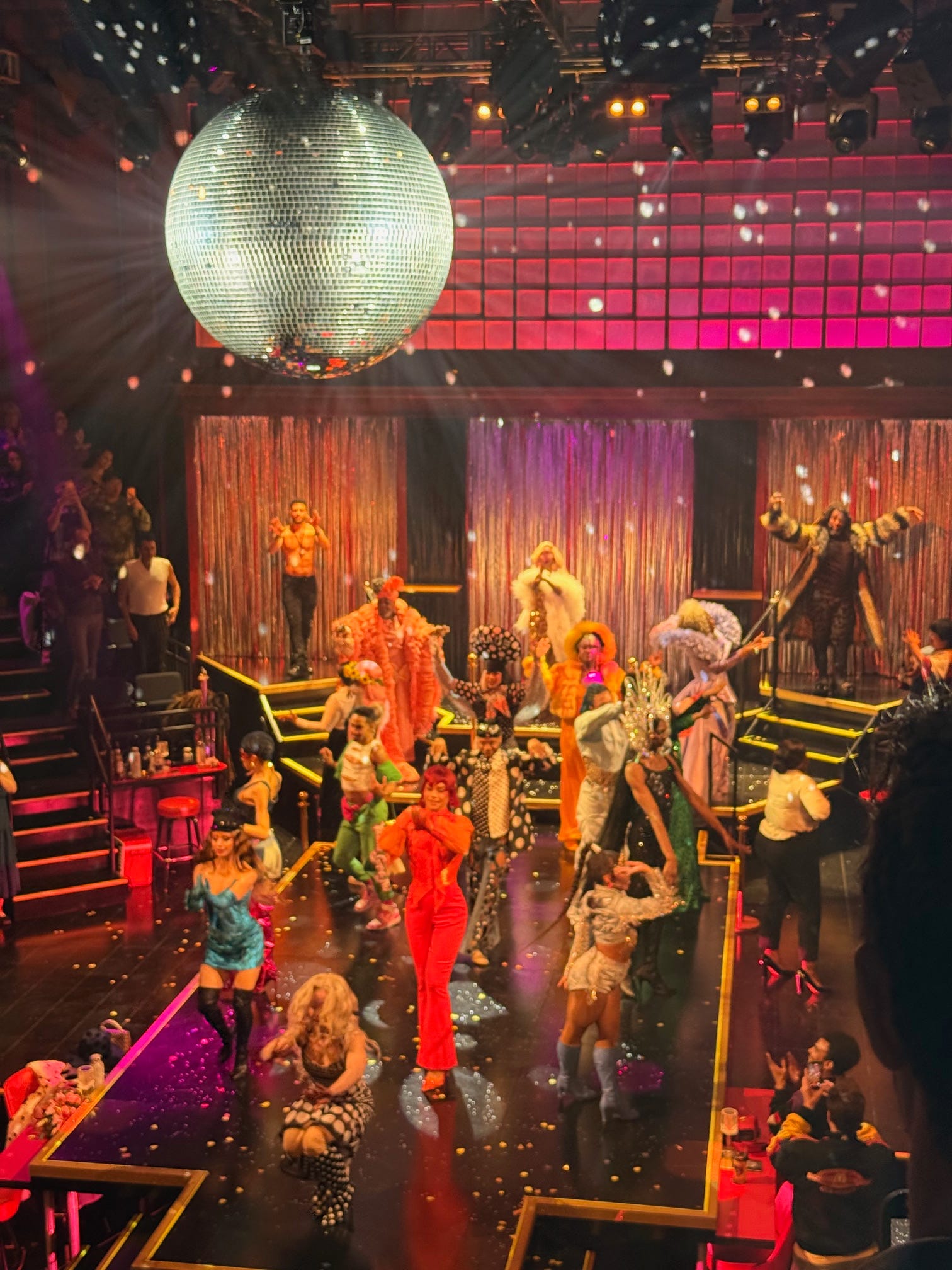
I saw Cats: The Jellicle Ball this weekend.
I’ve seen the original. I’m a Broadway person, I liked it, but if I’m being honest it never fully landed for me. I always felt like I was watching something impressive without really understanding what it was about. Cats who dance, “Memory,” a tire that goes to heaven. Fine.
Saturday night at the Broadhurst was a completely different experience. Same Andrew Lloyd Webber score, same T.S. Eliot poems, but reimagined through the world of ballroom culture: vogueing, houses competing, a runway down the center of the theater, André De Shields presiding over it all. Lloyd Webber himself was in the audience. I am already figuring out when I can get back. It was that good.
The thing I kept thinking afterward was that Cats was always about this. Characters fighting to be seen, performing their identity for the chance to be chosen. That’s ballroom. The material didn’t change. Someone just found the frame that made it make sense, and it only took 45 years.
But here’s what I think is the most interesting part: it goes both ways. Ballroom gave Cats its pulse back, but Cats gave ballroom a Broadway stage, Lloyd Webber’s blessing, and a mainstream audience that might never have walked into a ball. Both cultures lent the other something they didn’t have on their own, and that exchange is where the magic happened. When the second act opens with black and white images of ballroom’s founding mothers and legends projected on screens to “The Moments of Happiness,” and they are given their due on the grand stage, you get chills. That’s two worlds making each other bigger.
I’ve been chewing on that all week because it isn’t just happening with Cats.
Toy Story 5 comes out in June. I took my son to see Hoppers last week (really smart and funny, by the way) and the Toy Story 5 trailer ran before it. The villain is a frog-shaped smart tablet named Lilypad who takes over Bonnie’s attention the second she’s unboxed. When Jessie confronts her, the tablet responds: “I’m always listening.” Woody, apparently balding now, comes out of retirement. Thirty-one years in, the franchise is finally saying the quiet part out loud: the competition for a kid’s imagination isn’t other toys. It’s screens.
The Comeback is back on HBO. Lisa Kudrow’s Valerie Cherish, the most lovably delusional actress on television, is now starring in the first sitcom written entirely by AI, surrounded by producing partners who are essentially babysitting the technology. Every season of this show has predicted the next era of television about five years early, and this one seems to be asking whether there’s going to be a next era at all.
And then there’s Hilary Duff, who just debuted at number three on the Billboard 200 with her first album in over a decade. Her intimate comeback shows sold out instantly, and she’s heading out on an arena tour this summer that includes Madison Square Garden. Her last headlining U.S. dates were in 2007, when she performed “With Love” on the Today Show with choreography that was, generously, low-effort. It became one of the internet’s most beloved memes. She hated it. Told Glamour it had “not been a fun thing to follow me around.” But at her first show back in London, she did the dance again and pulled fans on stage to do it with her. She went on Fallon and taught him the choreography. She turned the thing the internet was roasting into the thing the audience was cheering for.
Four legacy properties, four different challenges, same question: how do you bring something people already know into a world that’s moved on?
What they got right
They let the challenge in. Cats rebuilt the staging around ballroom. Toy Story made the tablet the villain. The Comeback handed Valerie the AI script and let her be Valerie about it. Hilary Duff put the meme in the setlist.
In each case, the core stayed intact: the score, the characters, the voice, the catalog. What changed was the frame, and the new frame didn’t water anything down. It made the original feel more true.
(A quick counterexample: And Just Like That, which tried to meet the moment by apologizing for itself. Sex and the City was a specific show: specific tastes, specific neuroses, specific shoes. It was cool because it didn’t care whether you thought it was cool. And Just Like That cared very much, and you could feel it. The difference between meeting the moment and chasing it is the difference between conviction and anxiety.)
What I’d steal if I were running a brand
Every legacy brand faces this eventually. You have something people recognize, maybe even love, and the world has shifted. If that’s you right now, I think there’s genuinely good news in what these four are doing.
Know what’s actually yours. Cats’ core was never the leotards. It was the competition, the longing, the performance of identity. Most brands confuse their packaging for their product. Once you figure out what’s actually essential, the other decisions get easier.
Let the threat in the room. Toy Story could have made another movie about toys in a closet, but instead it made the existential crisis the plot. If your category is being disrupted, your consumer already knows. Naming it honestly is one of the most powerful things you can do.
The right context feels like a homecoming, not a pivot. Ballroom didn’t change those poems, it just made visible something that had been sitting there for decades. If your new direction requires a deck to explain why it makes sense, it probably doesn’t. But when you find the right one, you’ll feel it, and your audience will too.
The best collisions are mutual. When a legacy brand meets a new culture or community, it shouldn’t be extractive. It should be an exchange where both sides walk away with something they couldn’t have gotten alone. If only one side benefits, the audience can feel it.
Own everything, including the awkward parts. Hilary Duff could have buried the “With Love” meme, but instead she put it on stage and pulled fans up to do it with her. The stuff you’re tempted to hide is usually the stuff that makes you human. Give yourself permission to own all of it.
You don’t need the answer. The Comeback doesn’t know what AI means for entertainment. It just puts Valerie in the middle of it. Woody says in the trailer: “Toys are for play, but tech is for everything.” The brands earning goodwill right now aren’t the ones with all the answers, they’re the ones willing to say they’re still figuring it out.
Lloyd Webber said after seeing The Jellicle Ball that T.S. Eliot would have loved it. I think that’s the test. If the person who made the original would recognize the soul of their work inside the new version, you’ve done something real. If they wouldn’t, you’ve just redecorated.
See you next Tuesday at 7 AM.
If this one landed, I’d love to hear which legacy brand you think is pulling this off or blowing it. Leave a comment or hit restack. It helps more than you’d think.
The "homecoming, not a pivot" line stopped me. When both sides get to be fully themselves and somehow make each other bigger — that's the whole thing.