

What Everyone Gets Wrong About Editors-in-Chief

People think being an Editor-in-Chief is about having impeccable taste. Refined sensibility. A singular vision that reshapes culture.
And yes—taste matters. You need aesthetic judgment, the ability to recognize quality, cultural fluency. But taste alone? That just creates content for people exactly like you.
The real skill is knowing when to step completely outside your own perspective.
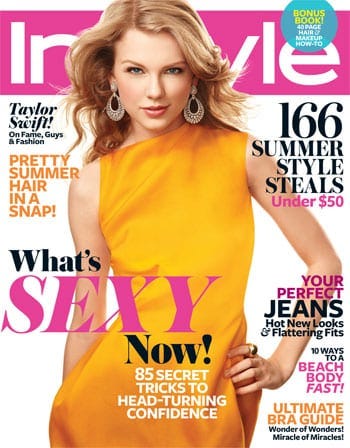
Let me tell you about editing InStyle’s annual bra guide.
Every year during the eight years I edited InStyle, I oversaw our annual bra guide. I was the first and only male Editor-in-Chief in the magazine’s history, which meant I was editing a feature about a product I had zero personal experience with and would never wear.
But I knew how valuable this information was to our readers—sizing, innovation, new entries into the market. It was a signature piece of editorial. Readers waited for it.
Here’s what I had to do: Once our expert editors had done the market research and drafted the piece, I couldn’t rely on instinct or personal preference. I had to put myself completely in the shoes of our audience.
I asked every question I might have if I really wanted to not only understand the feature but act upon the information: • Not just the WHAT (here are the bras) • But the justifying WHY (why does this innovation matter? why should I care about this feature?) • And then the actionable HOW (how do I know which is right for me? how do I actually find my size? where do I buy it?)
My taste didn’t matter. My job was to have rigorous empathy for the reader.
This wasn’t unique to the bra guide. It applied to everything:
Celebrity covers I chose because our readers loved them, even when I personally didn’t connect with that star. Fashion trends I had to explain clearly, even when they weren’t my aesthetic. Stories I had to kill because they wouldn’t serve readers, even though I found them fascinating.
Yes, I had taste. But the metric wasn’t “Does Ariel think this is cool?”
The metric was “Will this inform, inspire, or help our reader take action?”
That’s editorial discipline. And over the past four years building Boston Seaport’s brand with an incredible team of marketers, I’ve applied the same thinking.
Except here, it’s more complex than a magazine with one core audience. Boston Seaport serves multiple audiences simultaneously: first-time visitors, business travelers, daily workers, residents, people celebrating special occasions, folks who’ve made it their favorite Boston neighborhood.
That’s a lot of shoes to step into.
Each one needs something different. The tourist needs wayfinding and discovery. The office worker needs reliable lunch spots. The resident needs reasons to stay engaged. The occasional visitor needs something worth coming back for.
My job isn’t “What do I think is cool about this place?”
It’s “What does each of these people need to have a great experience here?”
Same editorial discipline. Just more perspectives to inhabit.
I see this challenge everywhere in brand building. Teams have great taste—their creative is beautiful, their messaging is clever, their aesthetic is refined. The work comes from a genuine place of passion and expertise.
But here’s what I’ve learned: It’s easy to accidentally create for ourselves and our peers instead of our audience. To choose clever over clear because it feels more creative. To optimize for what impresses our industry instead of what helps our customers take action.
It’s not a mistake—it’s human nature. We’re drawn to what resonates with us personally. Good taste is what got us here in the first place.
But the breakthrough happens when we add rigorous empathy to that taste. When we expand beyond our own perspective to truly inhabit our audience’s needs.
Here’s the framework I used at InStyle and use now:
WHAT: The information (what exists, what are the options) WHY: The justification (why does this matter? why should they care?) HOW: The action (how do they choose? how do they implement? how do they act on this?)
Most brands stop at WHAT.
The ones that win give their audience the WHY and the HOW.
This week, look at your last piece of content—a webpage, an email, a social post.
Ask: • Am I being clear or just clever? • Would this make sense to someone encountering us for the first time? • Have I given them the what, the why, AND the how? • Is this serving my ego or my audience?
The best editors—and the best brand builders—aren’t interested in impressing a small group of people who already agree with them. They want their vision and message to reach the absolute maximum number of people who would benefit from it.
That requires taste, yes. But more importantly, it requires humility and empathy.
That’s editorial thinking. And that’s what I’ll be exploring every week in The Foxman Edit
.
As someone who intimately watched how you transformed In Style, I think you left out one really important ingredient for the EIC role which you innately had: VISION.